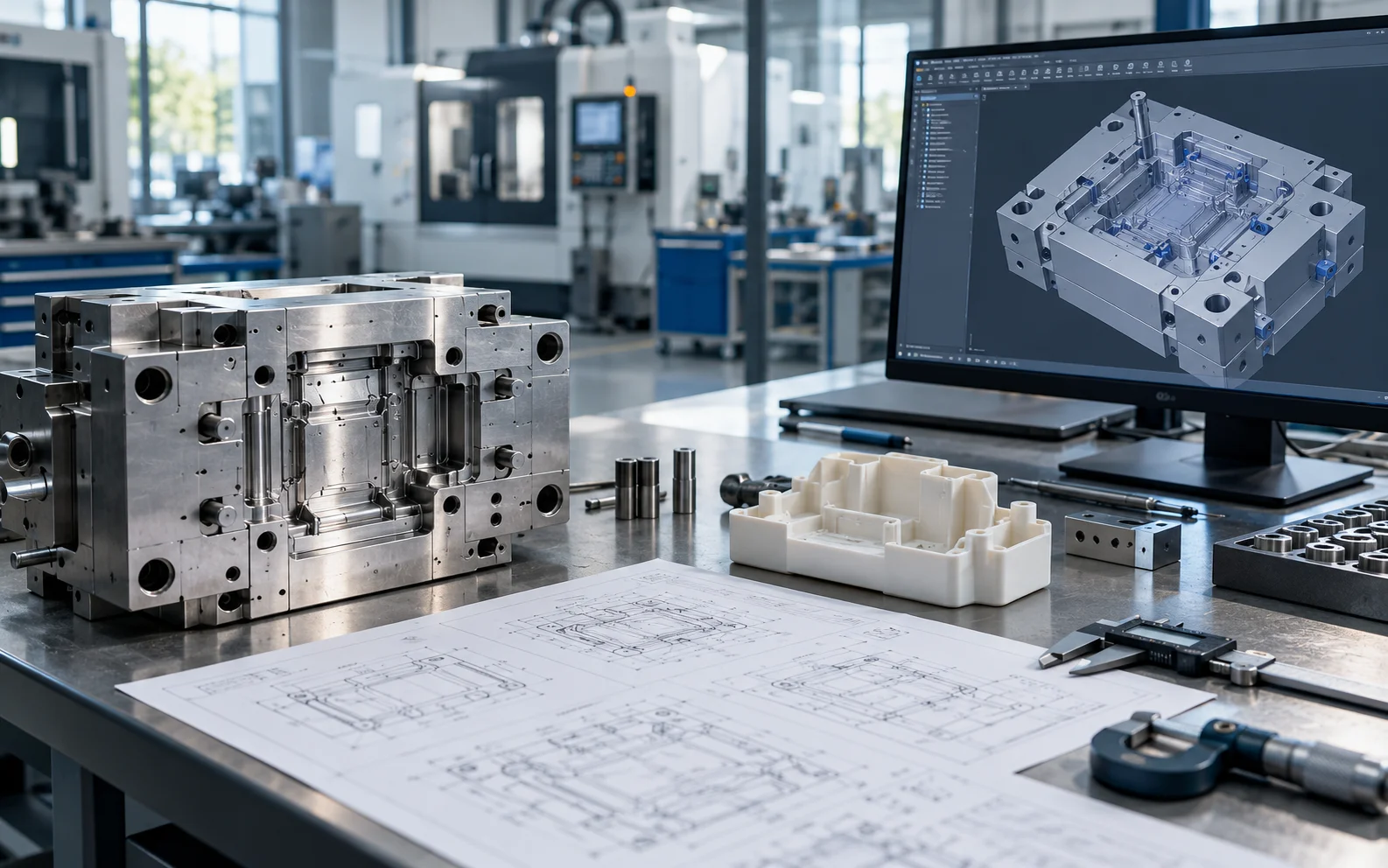
7 Key Points for Quality Parts in Plastic Injection
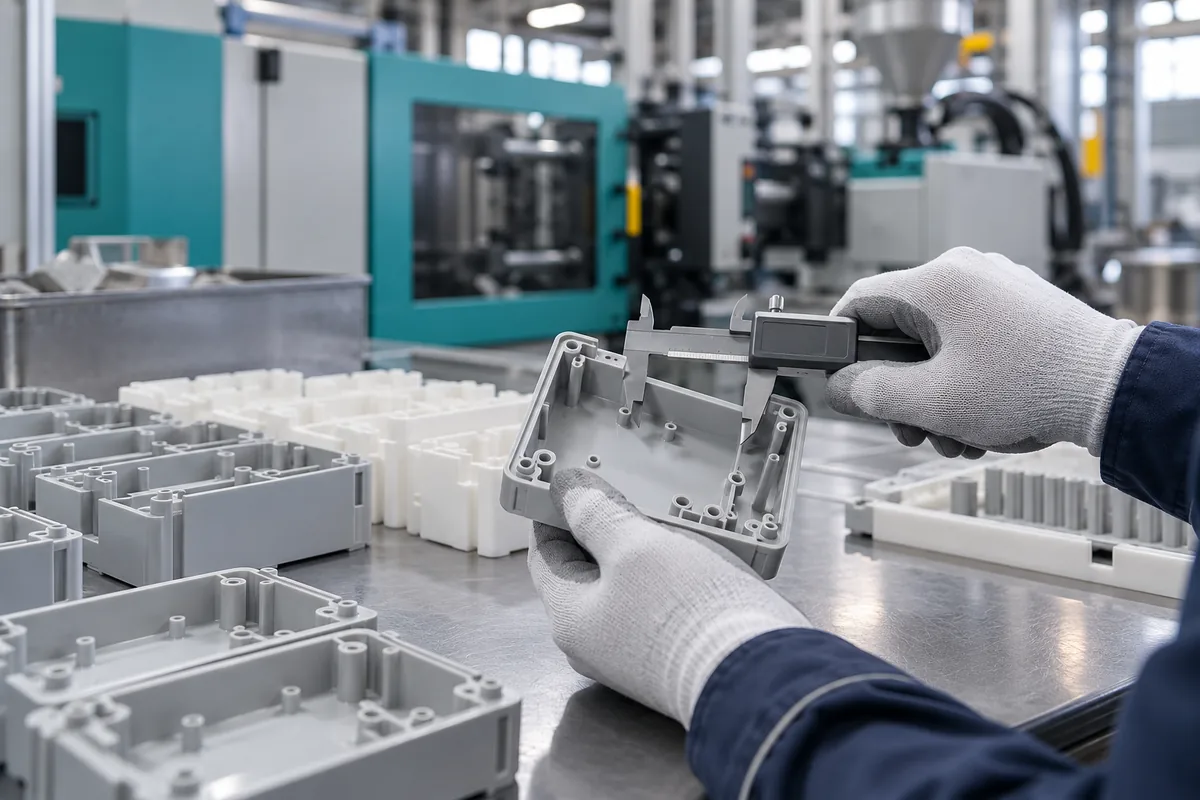
Quality in plastic injection comes from a well-designed mould, the right material and a well-tuned process working together. When one is missing, flash, sink marks, warpage or short shots appear. Here are 7 key points that determine quality in plastic injection production.
1. Balanced Wall Thickness
Differences in wall thickness cause uneven cooling, leading to sink marks and warpage. Balancing wall thickness at the design stage prevents most of these problems.
2. The Right Material, Properly Dried
Each polymer has different strength, flexibility and thermal behaviour. Hygroscopic materials (PA, PC, PET, etc.) must be dried before moulding; otherwise silver streaks and brittleness appear.
3. Mould Temperature and Cooling
Mould surface temperature affects gloss, internal stress and dimensional stability. Balanced cooling channels shorten cycle time and prevent warpage.
4. Injection Pressure, Speed and Holding
Too little pressure causes short shots; too much causes flash. Holding pressure and time compensate for shrinkage as the part cools, preserving dimensional accuracy.
5. Gate Location
Where the melt enters the mould determines flow direction, weld line positions and part appearance. The right gate location gives balanced filling without marks on visible surfaces.
6. Mould Maintenance
Wear on the parting line causes flash, blocked vents cause burn marks, and fouled cooling channels lengthen cycle times. Regular maintenance protects mould life and part quality.
7. Dimensional Control and Traceability
Regular dimensional checks throughout series production, after first-article approval, catch deviations early. Inspection records make quality sustainable.
Mould and Production Under One Roof
When production runs in the same facility where the mould was made, responsibility for quality sits in one place, and mould and process issues are solved together. No mould yet? Start with our mould making service and request a quote.