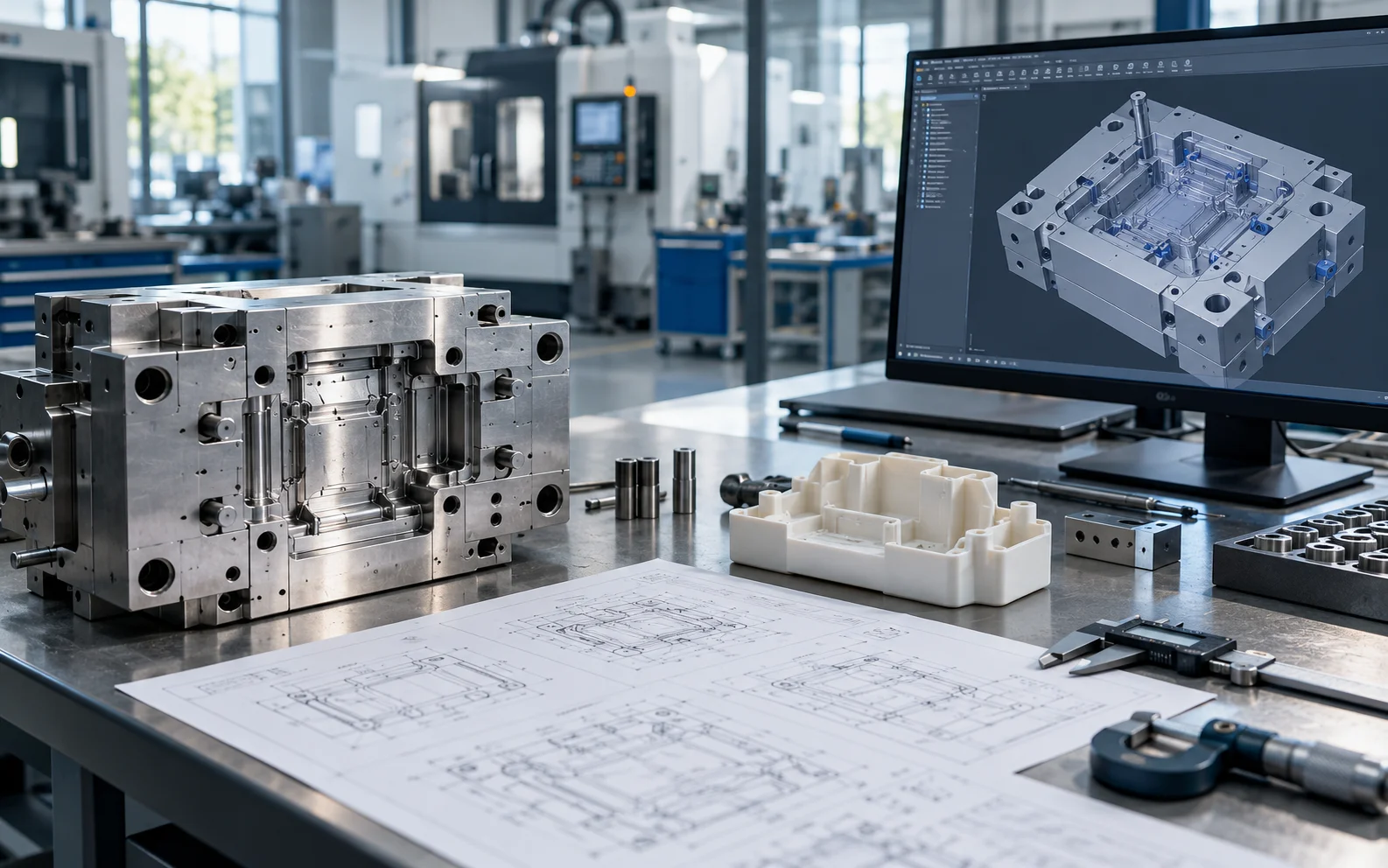
How Is a Plastic Injection Mould Made? Step-by-Step Mould Making
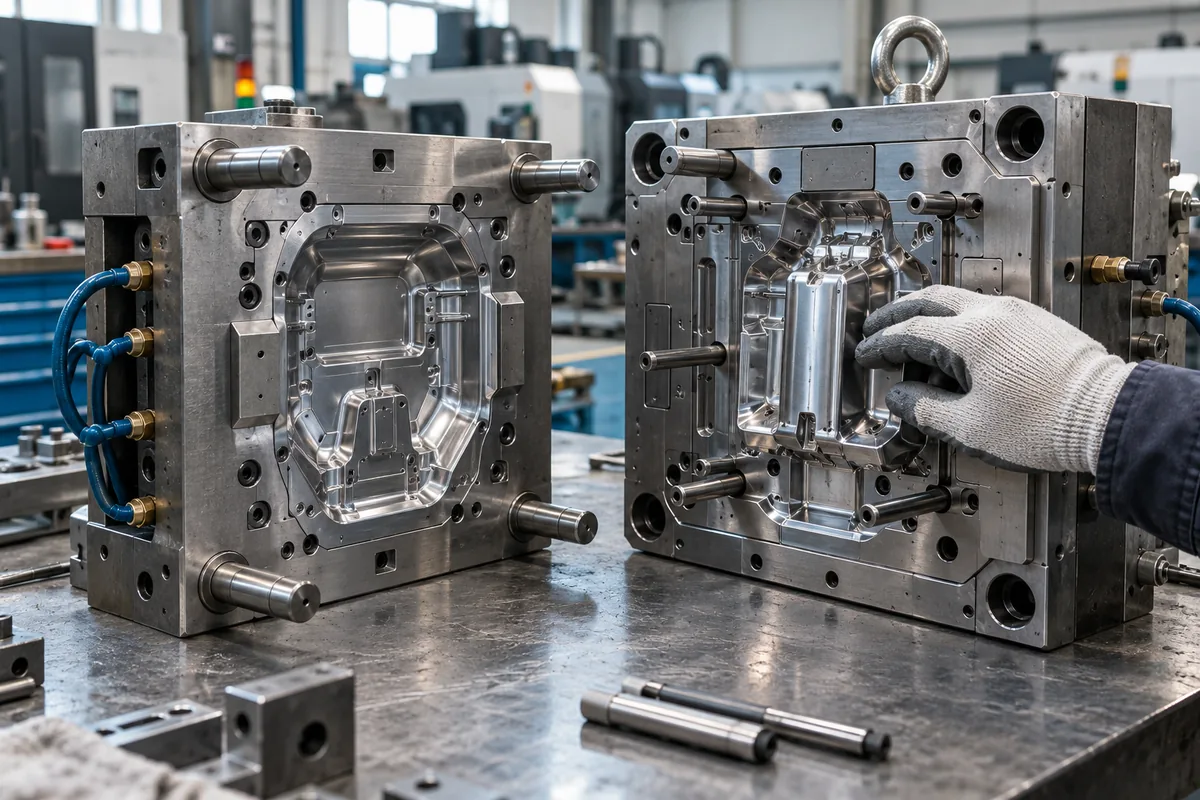
A plastic injection mould is a precision tool into which molten plastic is injected under high pressure and cooled into the final part. A good mould can produce hundreds of thousands of parts with the same dimensions and surface quality; a poorly designed one means scrap, flash, sink marks and frequent maintenance. Here is how a plastic injection mould is made, step by step.
1. Analysing the Part and Production Needs
Every mould starts with the part. Its intended use, annual volume, raw material (PP, ABS, PA, PC, etc.) and dimensional tolerances are evaluated together:
- How many cavities will the mould have — single or multi-cavity?
- Does the part have undercuts requiring cores or slides?
- Will the surface be glossy or textured?
- Are wall thicknesses balanced, and where are the risks of sink and warpage?
2. Mould Design
Next, the mould structure is defined: cavity and core halves, parting line, runner and gate locations, cooling channels and the ejector system. Well-placed cooling channels directly shorten cycle time and reduce warpage; correct ejector placement releases the part without marks. The aim is a mould that shortens production time, minimises scrap and is easy to maintain.
3. Selecting the Mould Steel
Material is one of the key factors in mould life. Heat-treated, wear-resistant mould steels are used for high volumes, and harder grades for abrasive materials such as glass-fibre-filled polymers. Certified material is a prerequisite for the mould to reach its expected life.
4. Precision Machining
Mould components are machined on a CNC vertical machining centre, CNC lathe and EDM machines. Deep narrow areas, sharp inside corners and fine details are produced by EDM; large surfaces and channels by milling — always targeting the part tolerances and the required surface finish.
5. Surface Treatment and Assembly
Machined parts are polished, textured and hardened where needed. Guide pins, bushes, ejectors and cooling connections are then assembled and all moving mechanisms are checked.
6. Sample Shots and Approval
When the mould is complete, the first sample shots are produced and measured. Flash, sink marks or short shots are corrected by fine-tuning the mould, and after customer approval the mould is ready for series production.
7. Series Production and Maintenance
With the approved mould, plastic injection series production begins. Regular cleaning, lubrication and wear checks extend mould life. Making the mould and running production in the same facility speeds up revisions and gives you a single point of contact.
Frequently Asked Questions
How long does it take to make an injection mould?
It depends on part complexity, number of cavities and mechanisms. Simple moulds take a few weeks; complex moulds with cores and slides take longer.
What determines the cost of a mould?
Part size, number of cavities, mould steel, surface finish and mechanisms are the main cost drivers. Proper analysis avoids unnecessary cost.
Request a quote and we will review your part and propose the right mould solution.